Load
Determine condensate demand during startup and normal operation. The pipe connection does not tell you that demand.

ENGINEERING EXPLAINED / TRAP
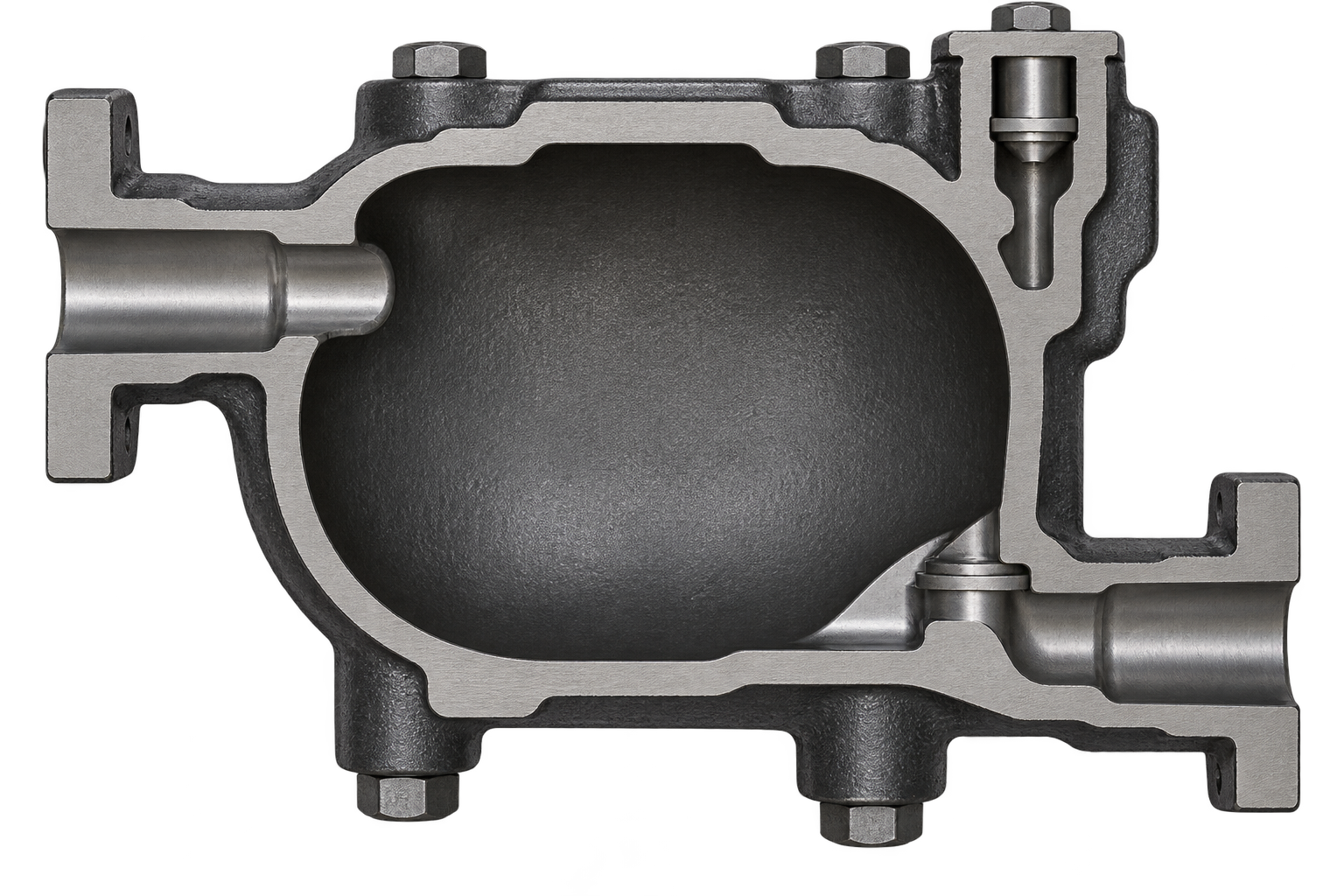
Explore how a float trap works, then put the steam-loss example through its assumptions.
By Nathan, chemical engineer and co-founder of RARE Labs.
SEE THE MECHANISM
Generic float-and-thermostatic principle. Actual designs vary.
Condensate raises the float and opens the discharge valve. As the liquid level falls, the valve closes. A separate thermostatic vent handles air; the float does not chemically detect steam.
Move the level to see the linkage and discharge change.
TLV: match trap type to its application · TLV: operating conditions and capacity
THE LEAK IN THE VIDEO
75.8 lb/hour
75.8 × 8,760 × $10 ÷ 1,000
A leak estimate, not trap-sizing advice.
DOE table conditions: steam discharges to atmosphere through a re-entrant orifice; discharge coefficient 0.72. Only published table combinations are available. Backpressure, actual failure opening and steam conditions can change the loss.
Table and example: U.S. DOE Steam Tip Sheet #1. The quoted 15–30% failure range concerns systems unmaintained for 3–5 years.
Determine condensate demand during startup and normal operation. The pipe connection does not tell you that demand.
Use the differential pressure actually available across the trap, including downstream backpressure and changing operating conditions.
Choose trap type, air-handling behavior and safety factor for the equipment and manufacturer guidance. A failed-closed trap can cost money through lost duty and damage.
Selection: TLV selection guide. Water hammer context: TLV water hammer causes and locations.
RARE LABS
We are building an autonomous scale-up system for chemistry using robotics and AI, starting with peptides and pharma.