
Cement is 8 percent of global emissions, and the fuel is not the main problem
The CO2 does not mostly come from what the kiln burns. It comes out of the limestone itself, so swapping the fuel leaves most of the emission exactly where it was. My fourth-year capstone team designed around that instead of against it.
Out now
Try Reflux Student free on Aspen Plus
Reflux Student drives your own Aspen Plus V14 from plain English. You type what you want, it opens the case, makes the change in Aspen, runs it, reads the result back and tells you what it verified. Aspen does the math. You keep the judgment. Windows, your own licence, and free to start is a trial with a limit on it, not a free product.
Enter your email on the next page and the download link lands in your inbox, so you can open it on the Windows machine Aspen lives on. Windows will say it does not recognise the app the first time: click More info, then Run anyway. The certificate is new and Windows trusts it by reputation, which takes downloads to build. Nothing is wrong with the file.
Not on Aspen Plus? Tell me which simulator you use → and you hear the day your build exists.
The emission is the chemistry
Making clinker means cooking limestone, calcium carbonate, into lime. That reaction releases CO2 no matter what you burn, and the kiln runs above 1400 °C to do it. Swap the fuel and most of the emission is still there.
The design
A cryogenic air separation unit supplies pure oxygen. The kiln burns its fuel in oxygen instead of air, so the exhaust is nearly pure CO2 rather than CO2 diluted in nitrogen. That stream is purified, compressed until it goes supercritical, and injected into carbonate rock, where it slowly reacts back into carbonate. The existing kiln stays.
Why there are no numbers here
My team designed this for a real cement producer under NDA, so the plant, the tonnes and the dollars stay in the report. What is public is the shape of the answer: capture at the kiln, do not rebuild the kiln, and put the carbon back where the limestone came from.
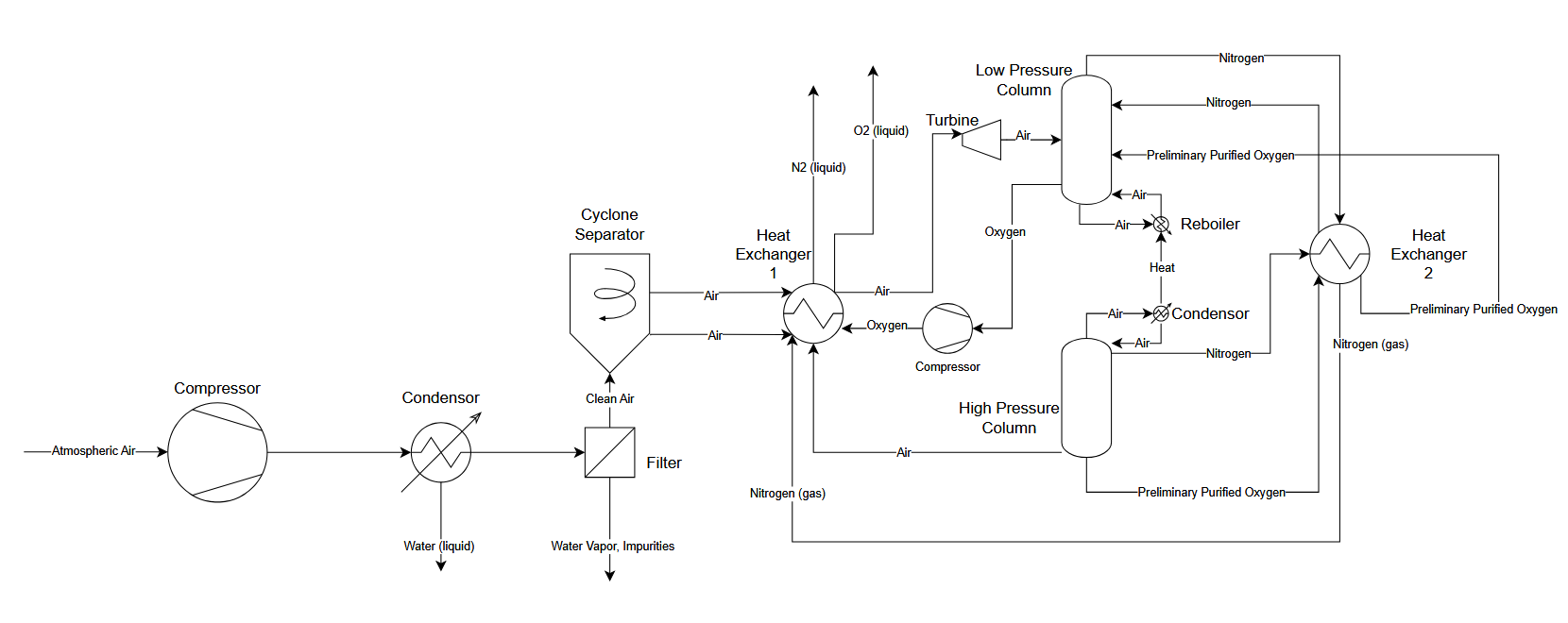
The whole design lived in simulation software that took a term to learn
Reflux drives that software from plain English, so building the model is a conversation instead of a term of training before you can start.
We’re opening a small trial to people who ask for it, and we are not precious about which software you run. Whatever you use, we’ll build for it.
Nathan Ruberto · Co‑Founder, CEO
Back to reflux.sh ->